

Texas is often described as if it arrived fully formed: a lone star, a wide horizon and an instinct for doing things its own way. The real Texas history is more complicated—and far more interesting. In the space of one century, the territory moved from Spanish rule to Mexican statehood, became an independent republic, joined the United States, entered the Confederacy and emerged from the Civil War into a new and still unfinished era.
Texas history was shaped in mission courtyards, on muddy battlefields, inside diplomatic houses and beneath a pink-granite dome. Visit those places today and the century stops feeling like a list of dates. It becomes a journey through the choices, ambitions and contradictions that shaped modern Texas.
BEFORE THE CENTURY BEGAN: A FRENCH MISTAKE ON THE GULF
The story begins with a wrong turn. In 1685, French explorer René-Robert Cavelier, Sieur de La Salle, missed the mouth of the Mississippi and established Fort Saint Louis near Matagorda Bay. The settlement failed within a few years, but France’s brief presence alarmed Spain and helped draw greater attention to the region.
Archaeologists have since recovered cannons, ceramics, coins and other traces of the colony. The Texas Historical Commission’s La Salle archaeology project offers a grounded account of what survived. It is a useful reminder that the borders later treated as permanent began as uncertain lines on competing maps.
1. SAN ANTONIO MISSIONS: TEXAS BEFORE INDEPENDENCE
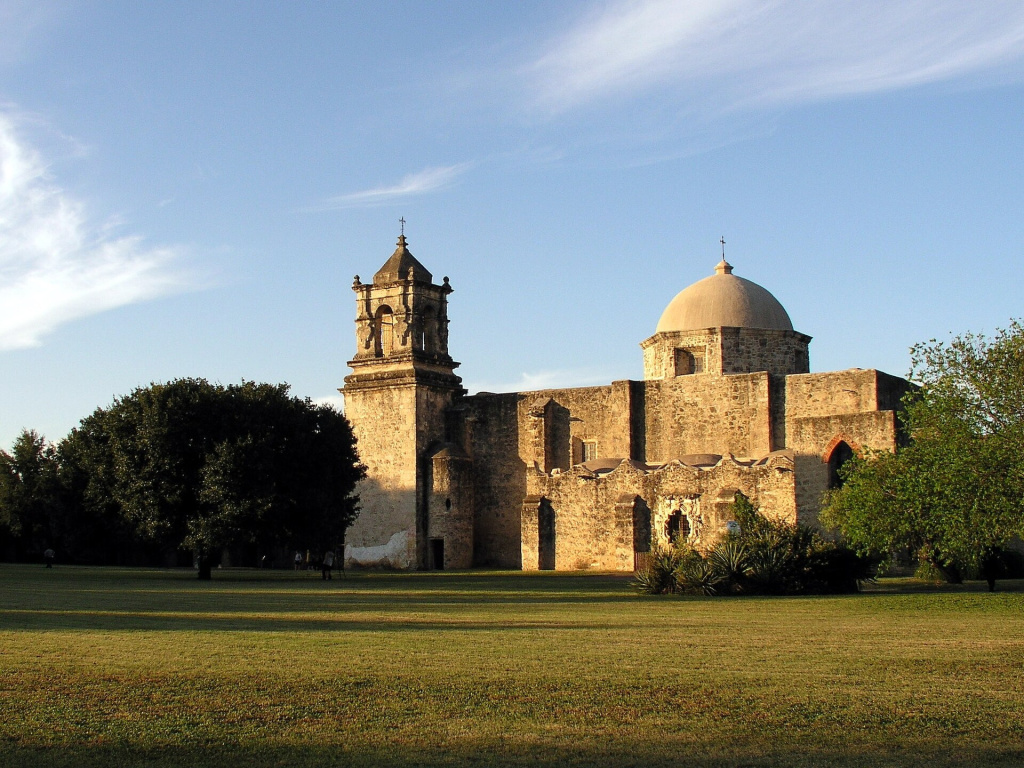
Long before Texas became a republic, the land was home to diverse Indigenous nations, including Caddo, Apache, Comanche, Karankawa and many others. Spanish missions and presidios added another layer. Around San Antonio, mission communities brought together Native peoples, friars, soldiers, farmers and craftspeople—often under coercive colonial systems that reshaped language, religion, work and daily life.
The surviving missions offer some of the clearest places to encounter this chapter of Texas history. At Mission San José and the other sites within San Antonio Missions National Historical Park, carved stone, irrigation channels and open plazas reveal communities that were far more complex than the familiar frontier image suggests.
This landscape also helped form the ranching traditions later associated with Texas. Native mission residents managed livestock and worked as vaqueros, contributing knowledge and skill to a culture that would eventually travel across the American West.
2. THE ALAMO: MEMORY, MYTH AND THE HUMAN COST
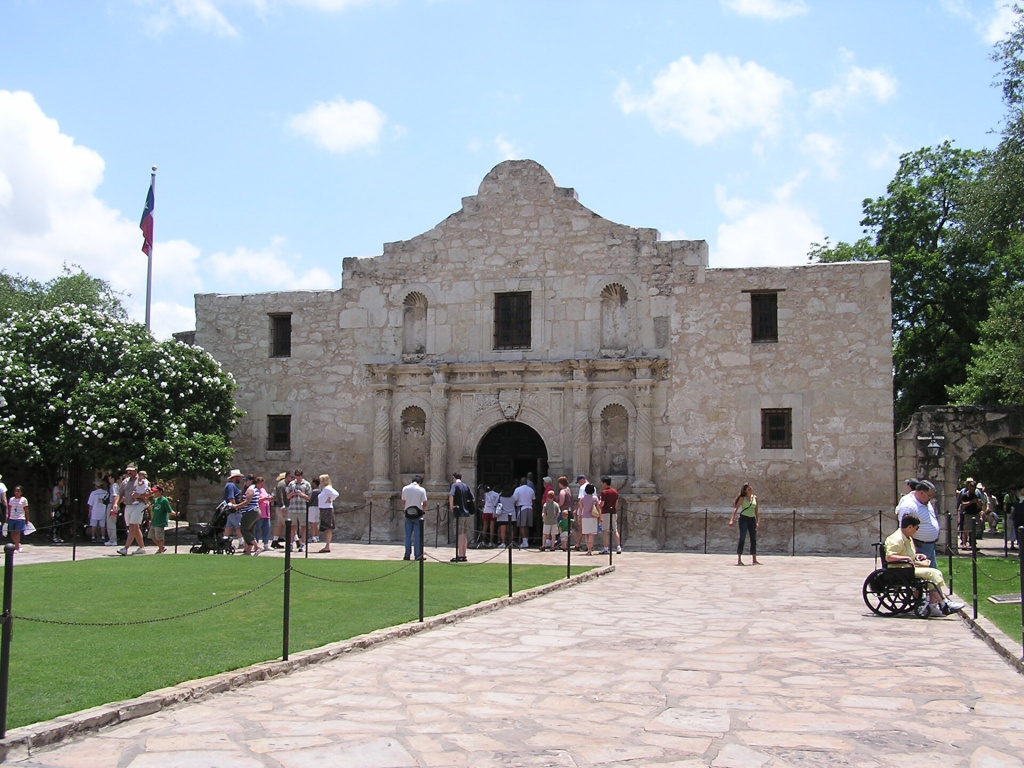
By 1821, Mexico had won independence from Spain, and Texas became part of the new nation. Mexican colonization policies encouraged immigration, including settlers from the United States. Tensions grew as newcomers pressed for greater autonomy and many defended slavery even as the Mexican government opposed it. Political conflict under President Antonio López de Santa Anna helped turn that tension into open rebellion.
In February 1836, Texian defenders occupied the former mission known as the Alamo. The siege ended on March 6, when Mexican forces breached the compound and killed the combat defenders. James Bowie, William Barret Travis and Davy Crockett became famous names, but the site’s fuller story also includes Tejano participants, enslaved people, women, children and noncombatant survivors.
For travelers exploring Texas history, the best Alamo visit makes room for both memory and evidence. The official Alamo site now interprets more than 300 years of history, not only the battle. Read Travis’s documented letter, walk the grounds slowly and treat later legends—especially the famous story of a line drawn in the sand—with appropriate caution.
3. SAN JACINTO: EIGHTEEN MINUTES AND AN UNFINISHED VICTORY
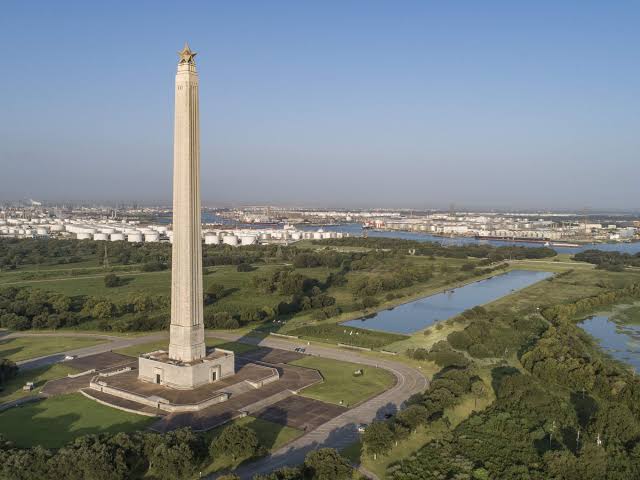
Few places compress the turning points of Texas history as powerfully as the San Jacinto Battleground. Six weeks after the Alamo fell, Sam Houston’s army surprised Santa Anna’s forces near the San Jacinto River. The decisive fighting is often described as lasting just eighteen minutes. Santa Anna was captured the next day, and the Treaties of Velasco called for Mexican troops to withdraw.
That victory gave the Republic of Texas de facto independence, but the ending was less tidy than the legend. Neither government accepted the treaties as a final settlement, and Mexico did not formally recognize the loss of Texas until the Treaty of Guadalupe Hidalgo in 1848. The Texas State Library’s San Jacinto collection preserves documents from this unsettled transition.
Today, the battlefield and monument sit east of Houston. The scale of the landscape helps explain both the suddenness of the attack and the enormous consequences that followed.
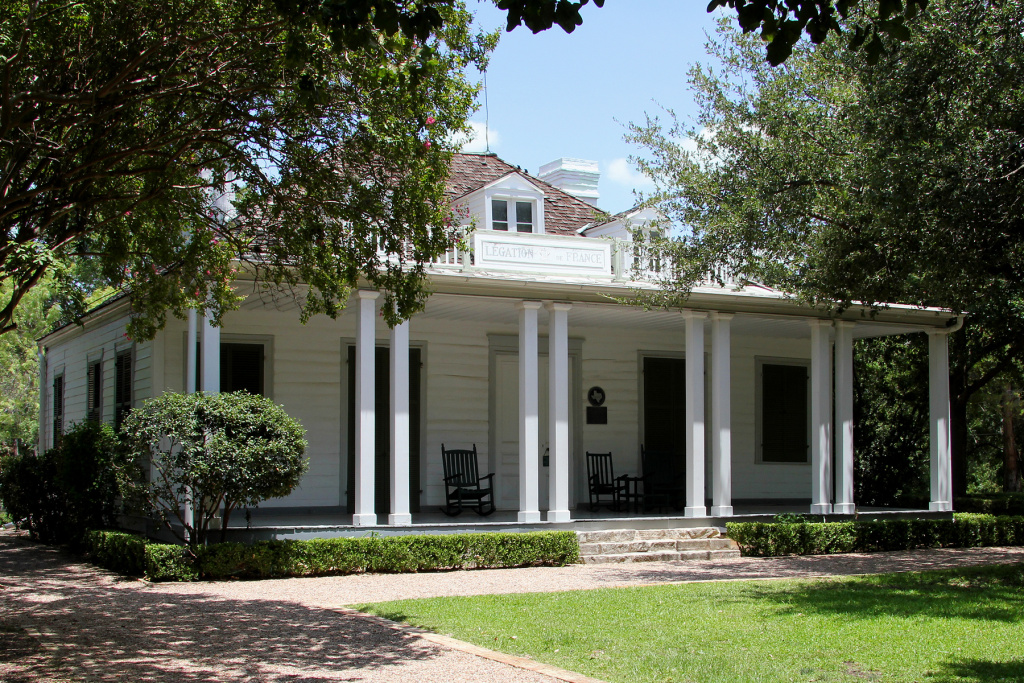
4. THE FRENCH LEGATION: REPUBLIC-ERA AUSTIN IN MINIATURE
The French Legation preserves one of the most unexpected diplomatic chapters in Texas history. The Republic of Texas lasted from 1836 to 1845. It had a president, a congress, its own currency and an urgent need for international recognition. France became the first European country to recognize the republic in 1839 and sent Alphonse Dubois de Saligny to serve as chargé d’affaires.
His home and diplomatic outpost opened in Austin in 1841. The elegant residence stood above a small capital of rough roads and modest buildings—a refined statement of international ambition in a place still becoming a city. Saligny’s quarrel with innkeeper Richard Bullock, sparked in part by wandering pigs, became the so-called Pig War and remains one of the republic’s more human diplomatic episodes.
The restored French Legation State Historic Site is now one of Austin’s most atmospheric places to encounter the republic. Its rooms and grounds make early diplomacy feel intimate rather than ceremonial.
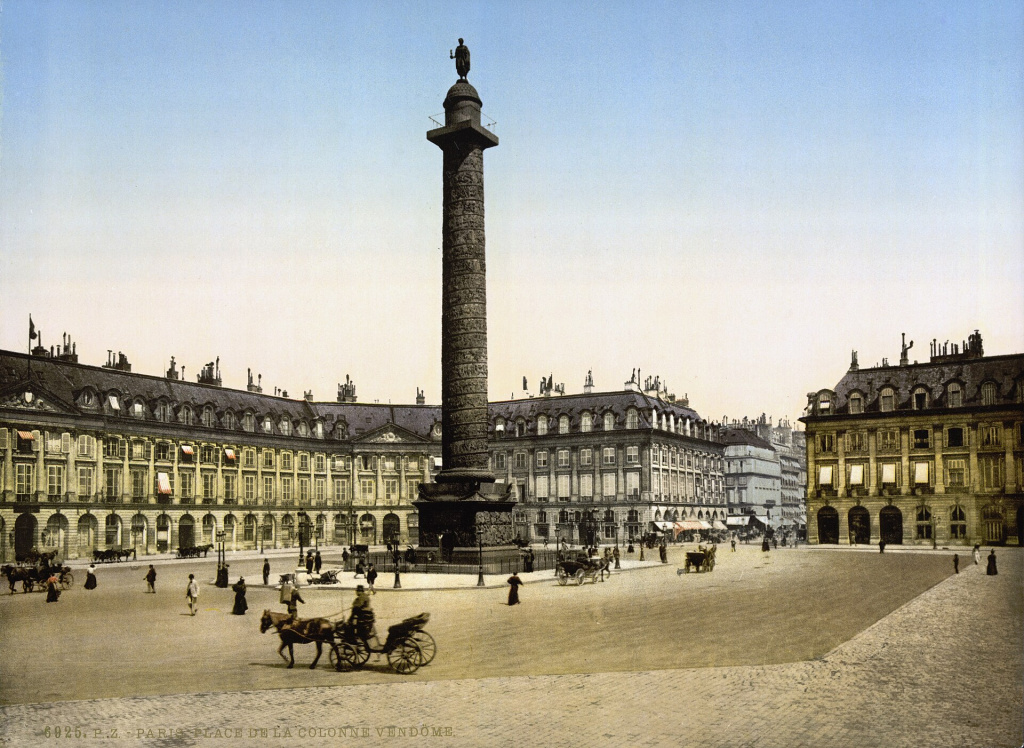
5. PLACE VENDÔME: WHEN TEXAS KEPT AN ADDRESS IN PARIS
Texas also maintained a legation in Paris. For a short period in the early 1840s, its representatives worked from 1 Place Vendôme, one of the city’s grandest addresses. The contrast is hard to resist: a cash-strapped frontier republic seeking loans and legitimacy from a mansion on a square associated with European power.
A plaque on the building still records the connection. The address now houses a hotel, but the more compelling detail is what the location represented. Texas was not merely looking west; its leaders were deliberately presenting the republic on an international stage.
For travelers pairing Texas with France, Place Vendôme creates an unexpected narrative bridge. It is a small piece of Texas history hidden in plain sight among Parisian façades.
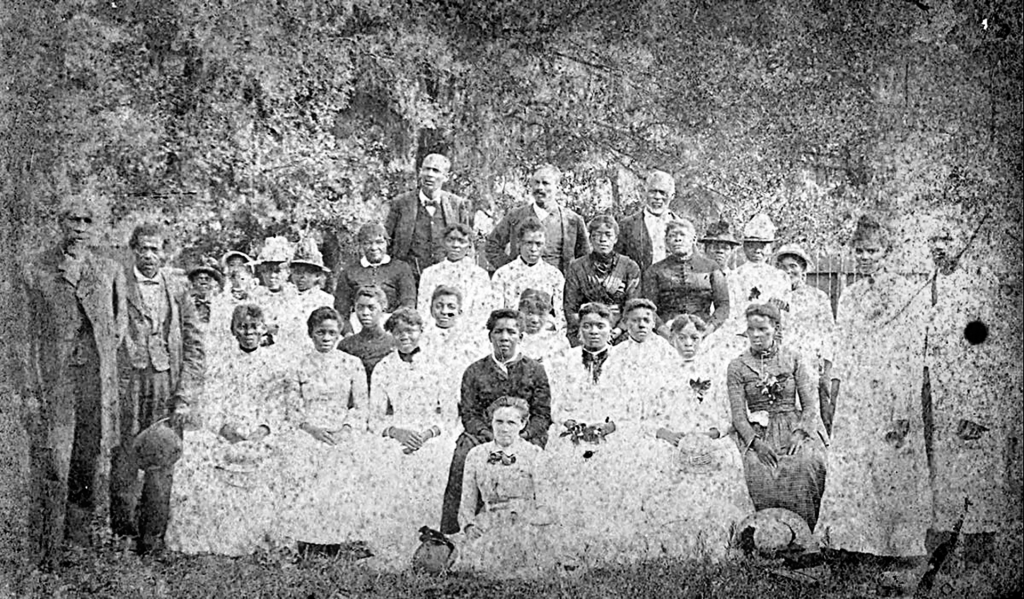
6. GALVESTON: WHERE FREEDOM WAS FINALLY ENFORCED
The events of June 19, 1865, are essential to understanding Texas history beyond independence and statehood. On June 19, 1865, Union Major General Gordon Granger arrived in Galveston and issued General Order No. 3, announcing that enslaved people in Texas were free. The date became Juneteenth, first celebrated by Black Texans and now observed across the United States. The National Park Service’s Juneteenth history explains why the day marks both liberation and the long delay in enforcing it.
In Galveston, the story is connected to real streets, buildings and community memory. A thoughtful itinerary should make time for those places rather than treating Juneteenth as a brief footnote between the revolution and the cattle trails.
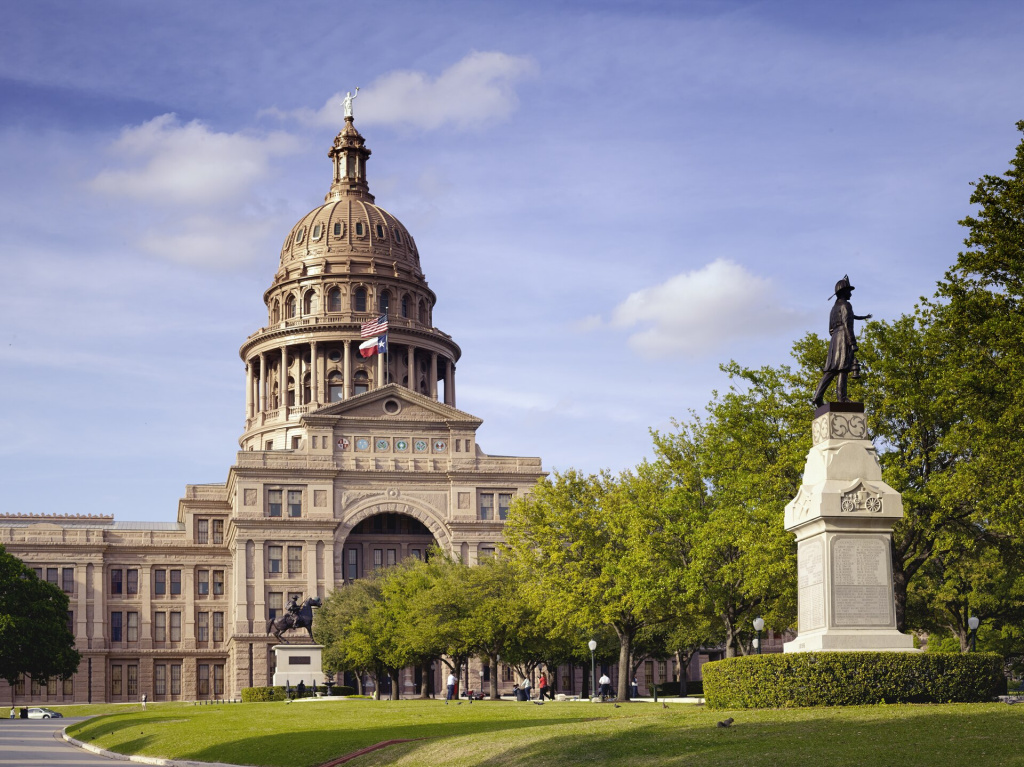
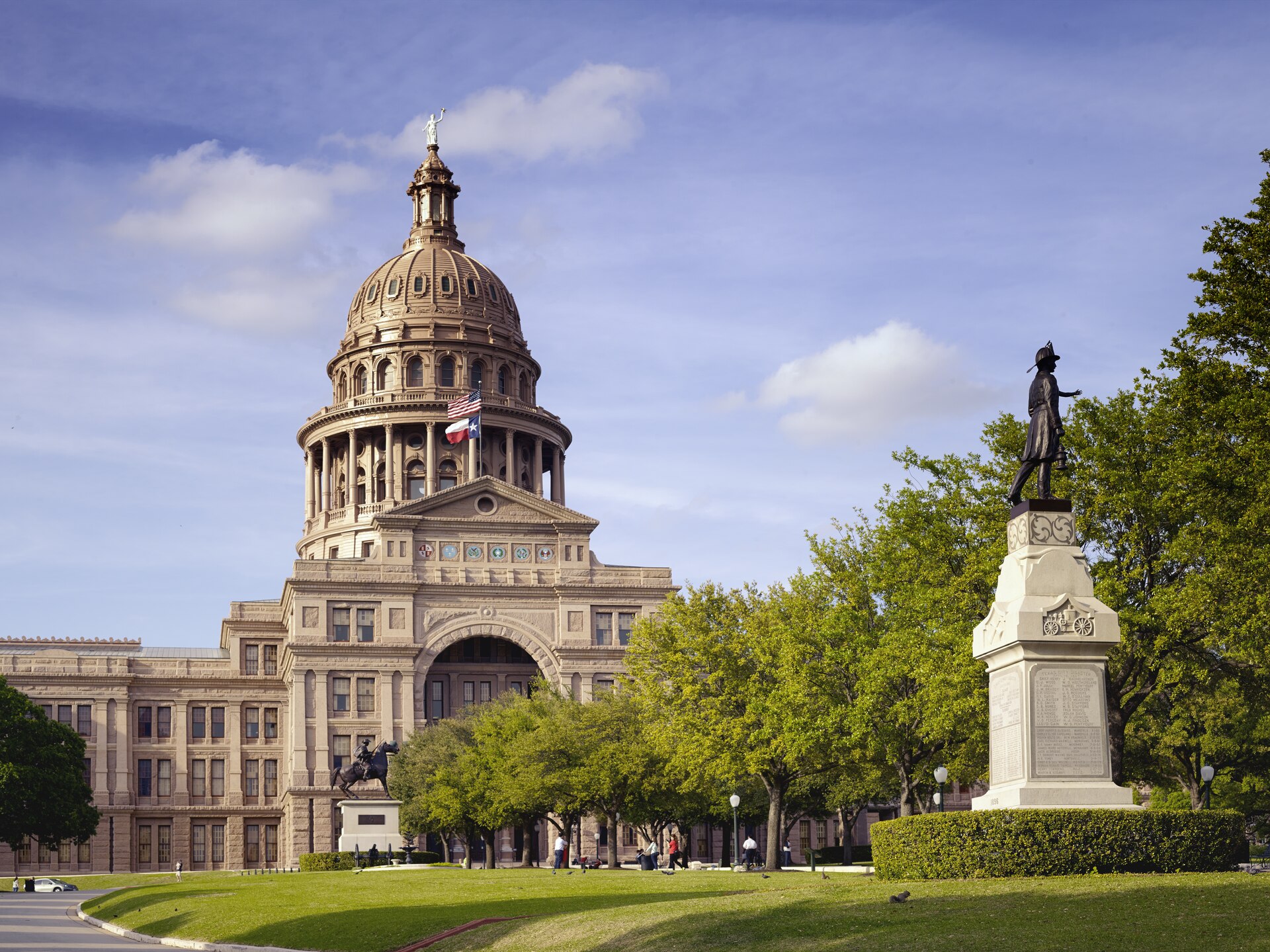
7. THE TEXAS STATE CAPITOL: THREE MILLION ACRES FOR ONE BUILDING
The Texas State Capitol gives one of the boldest chapters of Texas history a monumental physical form. By the 1880s, Texas needed a new statehouse after the previous Capitol burned. The state did not simply write a check. Under provisions authorized by the 1876 constitution, it offered three million acres of public land in the Panhandle to the Capitol Syndicate in exchange for constructing the building. That land later became the vast XIT Ranch.
Completed in 1888, the Capitol was built in a Renaissance Revival style and clad in warm Sunset Red granite. Its official height is 302.64 feet—14.64 feet taller than the U.S. Capitol.
A guided Texas State Capitol visit reveals the building’s symbolism, portraits, legislative chambers and carefully restored details. It is grand, certainly, but the land-for-construction bargain behind it says even more about the scale of Texas ambition.
WHAT THE 19TH CENTURY LEFT BEHIND
Monuments tell only part of the story. Nineteenth-century Texas was shaped by Native nations, Tejano ranching families, enslaved and later emancipated Black Texans, immigrants from the United States, and communities arriving from Europe and Mexico. Their experiences were not interchangeable, and they did not share power equally.
In the Hill Country, German immigrants founded Fredericksburg in 1846, leaving a visible legacy in architecture, food, music and language. In San Antonio, Tejano traditions and the later Chili Queens helped shape a food culture that became inseparable from the city. On ranches and cattle trails, Black, Mexican, Indigenous and Anglo cowboys worked within a tradition rooted in vaquero skill.
This is why a good Texas history journey should move beyond a single heroic narrative. The most memorable trips leave room for competing perspectives—and for the living cultures that grew from them.
A THOUGHTFUL ROUTE THROUGH TEXAS HISTORY
Allow at least five to seven days. Begin with two nights in San Antonio for the Alamo and the mission trail, then continue to Austin for the Capitol and French Legation. Add Fredericksburg for Hill Country heritage, or extend to Galveston and the San Jacinto area for the republic and Juneteenth chapters.
San Antonio: Walk the mission trail early, return to the Alamo with time for the exhibits, and reserve an evening for the city’s Tejano-influenced food culture.
Austin: Tour the Capitol, visit the French Legation and leave room for a private guide who can connect republic-era sites across the city.
Fredericksburg: Use a restored inn or quiet Hill Country property as a base for German-Texan heritage, galleries and a slower day between cities.
Houston and Galveston extension: Pair San Jacinto with Galveston’s Juneteenth history for a fuller view of independence, statehood and freedom.
The official Travel Texas historic-sites guide is a useful starting point. A bespoke itinerary can then add private access, expert guides, thoughtful hotels and enough unplanned time to absorb each place.
PLAN YOUR TEXAS JOURNEY WITH AZUROM TRAVEL
Texas is not one simple story. It is a collection of landscapes and voices—Spanish missions, republic-era diplomacy, hard-won freedom, immigrant communities and bold civic ambition. Experiencing it well means choosing the right sequence, the right guides and the right amount of time.
Azurom Travel can design a private itinerary around the chapters that matter most to you, with carefully selected accommodations and experiences that connect history to the present. Contact Azurom Travel or call (512) 222-6641 to begin planning.